
American tech billionaire Elon Musk on Saturday said his proposed visit to India has been postponed due to "very heavy Tesla obligations". The electric carmaker Tesla CEO -- who was expected to be in India on April 21 and 22 and scheduled to meet Prime Minister Narendra Modi -- wrote on X that he is looking forward to coming to India later this year.
Four persons died of asphyxiation after inhaling methane gas during "maintenance work" at a sewage tank in the Hyundai car factory at Irrungatukottai near Kancheepuram, fire service officials said.

Volkswagen Passenger Cars is targeting a volume sales growth of about 15 per cent in the country in 2024, even as it expects the Indian passenger vehicle (PV) industry to grow by 5-7 per cent in the current year, its India brand director, Ashish Gupta, said on Thursday. This means the company is expecting to grow 2-3 times faster than the Indian PV industry in 2024. But globally, the German automaker is expecting just 3 per cent rise in sales this year, down from 12 per cent last year.

The dealers operating in the space have jumped nearly three times over the past two years.
The more powerful Eon variant comes with a 1.0-litre three-cylinder engine that is available to the European i10.
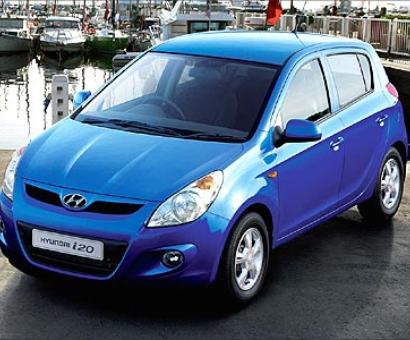
Korean auto maker Hyundai Motor on Tuesday launched two variants of its premium compact hatch pack 'i20' priced at Rs 7.72 lakh for the top end model in the Indian market.
"HMIL started accepting export orders for the i10 from December, 2007, and received 60,000 orders from the overseas market creating a record of clocking the fastest 50,000 units of export orders in just three months," the company said. The company would ship around 26,000 units by March 2008, and subsequently it would be exported to all the major markets across the globe covering over 90 countries by the end of the year, it added.
South Korean car giant Hyundai Motors has been asked by the National Consumer Commission to pay Rs 6.8 lakh to a consumer for supplying a defective Accent car. Ruling that it is the duty of the car manufacturers to replace defective vehicles, the Commission said that in such cases, the companies are "not justified" in protracting litigation for years merely because they have money power.

Clock 11% growth in the first 11 months of 2022.

Hyundai Motor India Ltd (HMIL) on Thursday said it will hike prices by up to Rs 20,000 across models, except the newly launched compact car Grand i10, from October 1 to offset the impact of rupee depreciation and rising input costs.
Hyundai Motor India on Monday forayed into the domestic sports-utility-vehicle market with the premium SUV model Terracan.\n\n\n\n
The automaker will have the global debut in India.
Passenger vehicle wholesales in India rose to a record high in October as companies pushed dispatches to dealers to cater to the enhanced demand in the festive season. The overall passenger vehicle wholesales in October rose to 391,472 units, up 16 per cent from 336,679 units in the same month last year. Last month witnessed the highest-ever dispatches of passenger vehicles in the domestic market by Maruti Suzuki India and Mahindra & Mahindra.

Recently, South Korean Foreign Minister, Chung Eui-yong, dialled his Indian counterpart, S Jaishankar, in New Delhi. His government, he said, "regretted the offence caused to the people of India". A day earlier, India had summoned the South Korean ambassador to express its "strong displeasure" over "an unacceptable social media post".
Passenger vehicle wholesales in India rose 9 per cent year-on-year in August on the back of strong demand for utility models, industry body SIAM said on Monday. Overall passenger vehicle dispatches to dealers rose to 359,228 units last month from 328,376 units in August 2022. Utility vehicle sales increased 34 per cent year-on-year to 181,825 units.
With its Storm Edge design language, the new Santa Fe replaces the older model and competes with the likes of the Toyota Fortuner, Ford Endeavour, Ssangyong Rexton and Chevrolet Captiva.

The car will be available with a 1.2 litre Kappa engine in three variants. The company has also decided not to absorb 1,200 trainees as it reduces working shifts in its Chennai plant.

Leading automakers Maruti Suzuki India, Hyundai and Tata Motors reported a double-digit increase in dispatches to dealers in April as the demand remained robust especially for the sports utility vehicles. The country's largest car maker Maruti Suzuki India (MSI) said its domestic passenger vehicle wholesales rose 13 per cent to 137,320 units last month as against 121,995 units in April 2022. Sales of mini cars, comprising Alto and S-Presso, fell 18 per cent to 14,110 units as compared with 17,137 units a year ago.
Maruti Udyog Limited continued to lead the Indian automotive market in customer satisfaction and dealer service bagging the J D Power Asia Pacific 2002 award for the category for the third consecutive year, while two Hyundai models bagged the awards.
Less than a year after taking charge, Hyundai Motor (India) managing director Byung-Ho Sung is on his way out and would be replaced by S S Yang from the company's China division.

Developed at an investment of Rs 620 crore (Rs 6.2 billion), the most on a car by Maruti Suzuki, the Ciaz will also be exported to West Asia, Europe, Africa and Latin America.

The 1.0-litre Hyundai Eon takes on the Japanese rivals in its segment, the Datsun GO and the Maruti Alto K10.

Corporate India is starting to step up its capital expenditure plans amid government incentives and signs of rising demand, company executives and analysts have indicated. This coincides with the Reserve Bank of India (RBI) recently citing a double-digit growth in private capital expenditure. Healthy balance sheets of banks and corporates, along with increasing capacity utilisation and improving business sentiment, are contributing to a favourable environment for sustained growth in private sector investments, the RBI said in its policy last week.
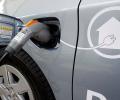
At a time when consumers increasingly embrace green mobility solutions, it is not electric cars but hybrids that are taking the lead, as automotive sales data indicate. Since January, 64,097 electric cars have been sold compared to 266,465 hybrids, according to data from the ministry of road transport and highways' Vahan dashboard. Hybrid car sales have surged from 4.42 per cent of the 4.1 million cars sold in calendar year 2022 to 7.2 per cent this year.
HMIL president Ashok Jha did not rule out the possibility of research on developing low-end cars priced between Rs 1 lakh and Rs 2 lakh. The R&D unit will come up with an investment of $40 million over 15 acres and will be operational in a year's time.
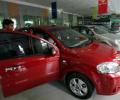
Data issued by Siam shows sale of PVs (cars, vans and utility vehicles) grew 14.3 per cent to 275,417 vehicles.
At a time when consumers increasingly embrace green mobility solutions, it is not electric cars but hybrids that are taking the lead, as automotive sales data indicate. Since January, 64,097 electric cars have been sold compared to 266,465 hybrids, according to data from the Ministry of Road Transport and Highways' Vahan dashboard. Hybrid car sales have surged from 4.42 per cent of the 4.1 million cars sold in calendar year 2022 to 7.2 per cent this year.

Tamil Nadu is leaving no stone unturned in marketing its upcoming global investors meeting on January 7 and 8. While business veterans are promoting the positives of the state's industrial climate through the 'Titans of Tamil Nadu" campaign, the state is narrating the human stories behind its robust industrial growth via the 'One Trillion Dreams' campaign. Among the industry bigwigs, who are showcasing Tamil Nadu to the world through this mega marketing initiative include Venu Srinivasan of TVS Motor Company, K M Mammen of MRF Ltd, Pratap Reddy of Apollo Hospitals, P R Venketrama Raja of Ramco Group, Mallika Srinivasan of TAFE; and Vellayan Subbiah of Murugappa Group.

Almost all of these companies either unveiled their new electric vehicle or alternative energy-powered models.

India's flagship motor show Auto Expo 2023 kicked off on Wednesday with the global unveiling of Suzuki Motor Corporation's concept electric SUV 'eVX' which is slated to hit the market by 2025. The company's Indian arm Maruti Suzuki India is among the major manufacturers participating in the show that has returned after three years. The Concept eVX is a mid-size electric SUV concept designed and developed by Suzuki Motor Corporation (SMC), Japan. It will be powered by a 60 kWh battery pack offering up to 550 km of driving range on single charge.

Country's largest carmaker Maruti Suzuki India (MSI) on Monday reported 8.7 per cent increase in total sales in February.

'We deeply apologise for a post that was published on some KFC social media channels outside the country. We honour and respect India, and remain steadfast in our commitment to serving all Indians with pride,' according to a message on KFC India official account on Twitter.

Union Minister Nitin Gadkari on Tuesday launched the country's first crash testing programme Bharat NCAP aimed at improving road safety standards of motor vehicles up to 3.5 tonnes. Bharat New Car Assessment Programme (Bharat NCAP) is India's own crash testing programme and is cheaper than tests conducted abroad, Gadkari said, adding that the star ratings will help buyers understand the quality of the product and make an informed purchase decision. Bharat NCAP will be implemented from October 1, 2023.

Benchmark equity indices Sensex and Nifty closed higher on Friday after two days of fall, helped by buying in metal, telecom and auto stocks amid a firm trend in global markets. Automakers led by Maruti Suzuki India, Hyundai, Mahindra & Mahindra reporting robust wholesales of passenger vehicles and GST collections crossing Rs 1.50 lakh crore for the third straight month in May also added to the optimism. The 30-share BSE Sensex climbed 118.57 points or 0.19 per cent to settle at 62,547.11.
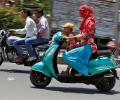
Two-wheeler exports from India have decreased by 20 per cent year-on-year (Y-o-Y) to 1.69 million units in the first half (H1) of 2023-24 (FY24) due to a challenging geopolitical situation and foreign exchange (forex) crises in key markets such as South Asia, industry body Society of Indian Automobile Manufacturers (Siam) said on Monday. On the other hand, passenger vehicle (PV) exports in H1FY24 increased by 5 per cent to 336,754 units because the key markets are much more diversified worldwide, Vinod Aggarwal, president, Siam, told reporters during a press conference. The Russia-Ukraine war, which started in February 2022, has brought significant instability to global fuel prices.

This year's edition, three years lost to the pandemic and scheduling, wore a distinctive shade of green, and, as would befit an era of technology shift from internal combustion engines to electric motors, had a clutch of high-technology exhibits and concepts. But the excitement of the expo's heyday was missing.
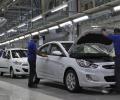
Domestic passenger vehicle (PV) sales saw a significant growth in October due to increased availability of semiconductor chips and rising consumer confidence. The sales figures during the month - which coincided with the first post-Covid festival season - released by the top ten carmakers saw a jump of 30.7 per cent to 322,885 units in October. Auto companies count wholesales - units dispatched to dealers - as sales.

Open order books in February breach 700,000; wait period for some models exceed a year.

'I felt very, very good sitting on the hot seat. It's a different feeling altogether.'
